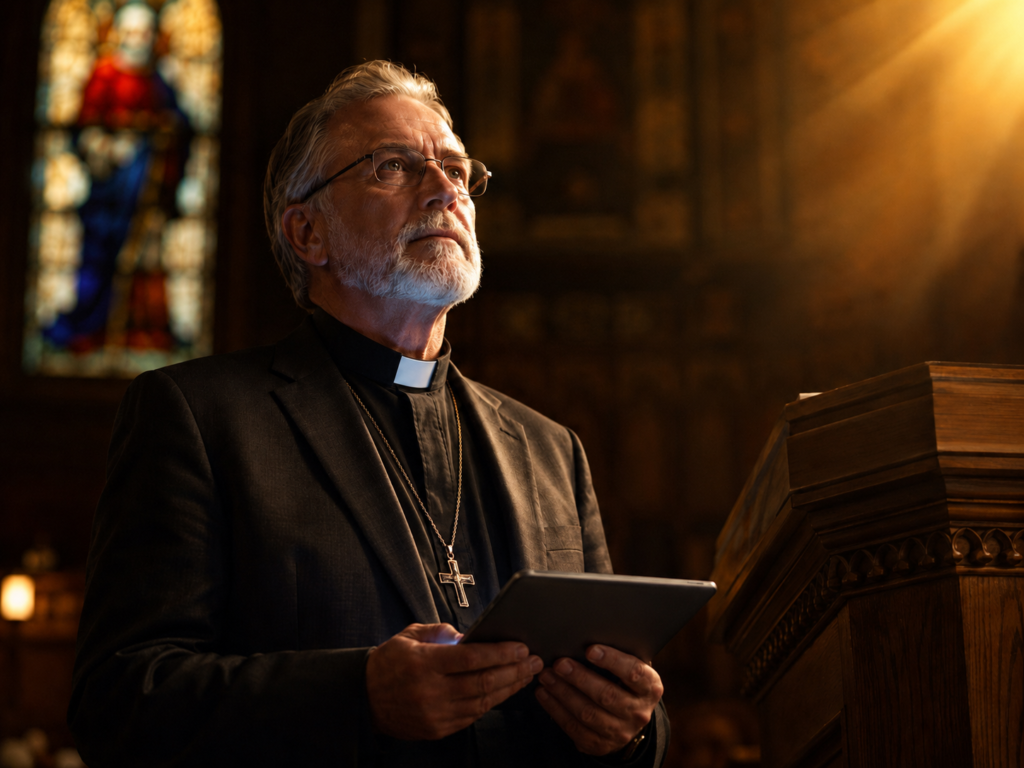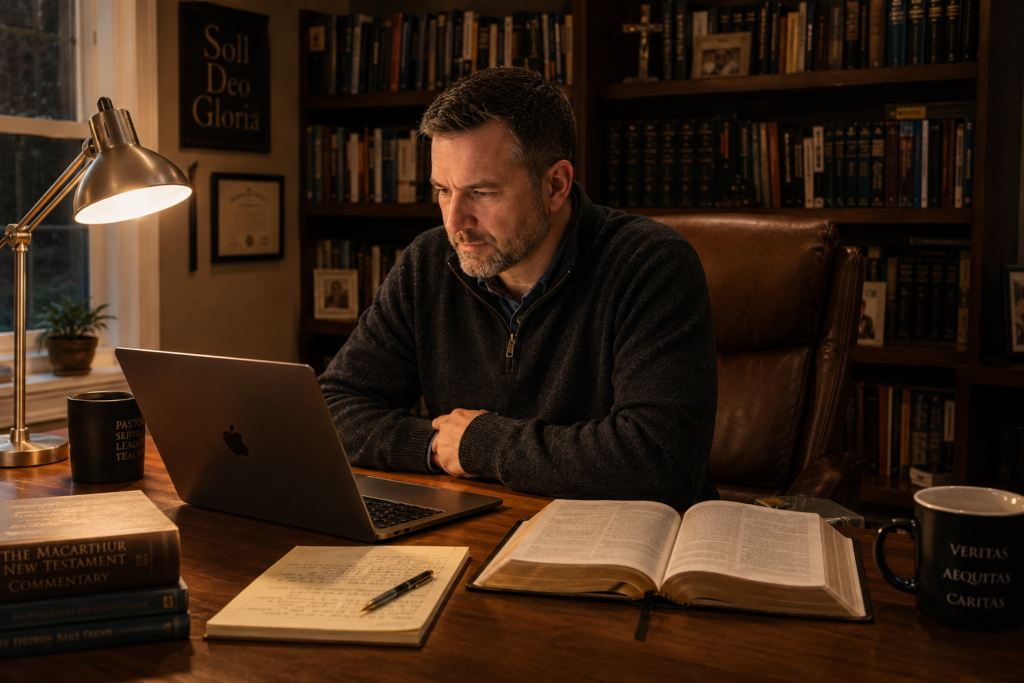
According to Barna’s 2025 State of the Church report, 28% of Protestant pastors now use artificial intelligence for ministry tasks at least once a week—up from just 4% in 2022. The AI adoption rate among churches is accelerating faster than many expected, yet nearly three-quarters of pastors remain on the sidelines. What are they missing? More than just efficiency gains. The data suggests a quiet transformation in how sermons are prepared, how pastoral care is delivered, and how churches engage their communities.
What the Barna Data Actually Shows
The Barna study, conducted in partnership with the American Bible Society and Gloo, surveyed 1,000 Protestant pastors in early 2025. It found that AI usage is highest among younger pastors (under 45) and in larger churches (attendance over 250). But the most striking finding is not the overall AI adoption rate—it’s the diversity of use cases. Pastors are not just generating sermon illustrations; they are using AI for administrative tasks, social media content, and even prayer requests.
“The pastors who are using AI weekly aren’t replacing their own study or prayer time,” says Barna senior research fellow Dr. Brooke Hempell. “They’re offloading the parts of ministry that are time-consuming but not spiritually formative—like drafting emails, summarizing articles, or brainstorming outreach ideas.”
This distinction matters. The 28% figure is not a sign of a tech takeover but of a pragmatic shift. Pastors who use AI report saving an average of 3 to 5 hours per week—time they reinvest in sermon preparation, counseling, and personal rest.
What the Other 72% Are Missing
If you’re among the 72% of pastors who haven’t tried AI, here’s what the research suggests you’re overlooking: not just speed, but depth. Tools like Pastor Rhema—an AI platform designed specifically for sermon preparation—can reduce research time from 6 hours to under 1 hour, freeing up space for prayer and reflection. But the real benefit may be cognitive: by handling repetitive tasks, AI lets pastors focus on the parts of ministry that require human wisdom.
Consider a pastor in Ohio who used AI to generate a first draft of a sermon outline on a passage he had preached many times before. “The AI suggested a connection to a current event I hadn’t considered,” he told me. “It didn’t write the sermon for me, but it got me unstuck.” That kind of creative spark is what early adopters report most often.
Is This Biblically Sound?
Some pastors worry that AI might compromise the Spirit’s work in sermon preparation. It’s a valid concern. But the early evidence suggests that AI, when used as a tool rather than a crutch, can actually enhance biblical engagement. A 2024 Lifeway Research study found that 62% of pastors who use AI say it helps them study Scripture more thoroughly, not less. The key is intentionality: using AI to amplify, not replace, the pastor’s own study and prayer.
That said, there are real risks. AI can produce theologically shallow content, and it can reinforce biases if not carefully monitored. Pastors who adopt AI must remain the final authority on what is preached. As one seminary professor put it, “AI can give you a thousand ideas, but it cannot discern which one is from the Lord.”
Three Practical Steps for Skeptical Pastors
If you’re curious but cautious, here is a simple framework for getting started:
- Start small. Use AI for one low-stakes task this week—drafting a bulletin announcement or summarizing a commentary article. See how it feels.
- Set boundaries. Decide in advance what you will never delegate to AI: personal prayer, pastoral counseling, or the final shaping of a sermon’s application.
- Involve your team. Ask a staff member or volunteer to experiment with AI and report back. You don’t have to learn it alone.
These steps mirror what early adopters have done. They didn’t overhaul their workflow overnight. They tested, adjusted, and kept what worked.
The Future of AI in the Church
The AI adoption rate among churches will almost certainly continue to climb. Barna projects that by 2028, a majority of pastors will use AI at least monthly. But the real question is not whether pastors will use AI—it’s whether they will use it wisely. The 28% who have already adopted AI are not necessarily more tech-savvy. They are simply willing to experiment with a tool that, used well, can free them for the parts of ministry that only a human can do.
As you consider your own approach, ask yourself: What is the one task in your weekly rhythm that drains you most? Could a tool like Pastor Rhema handle that task, even partially, so you can give your best energy to shepherding your flock? The answer may surprise you.