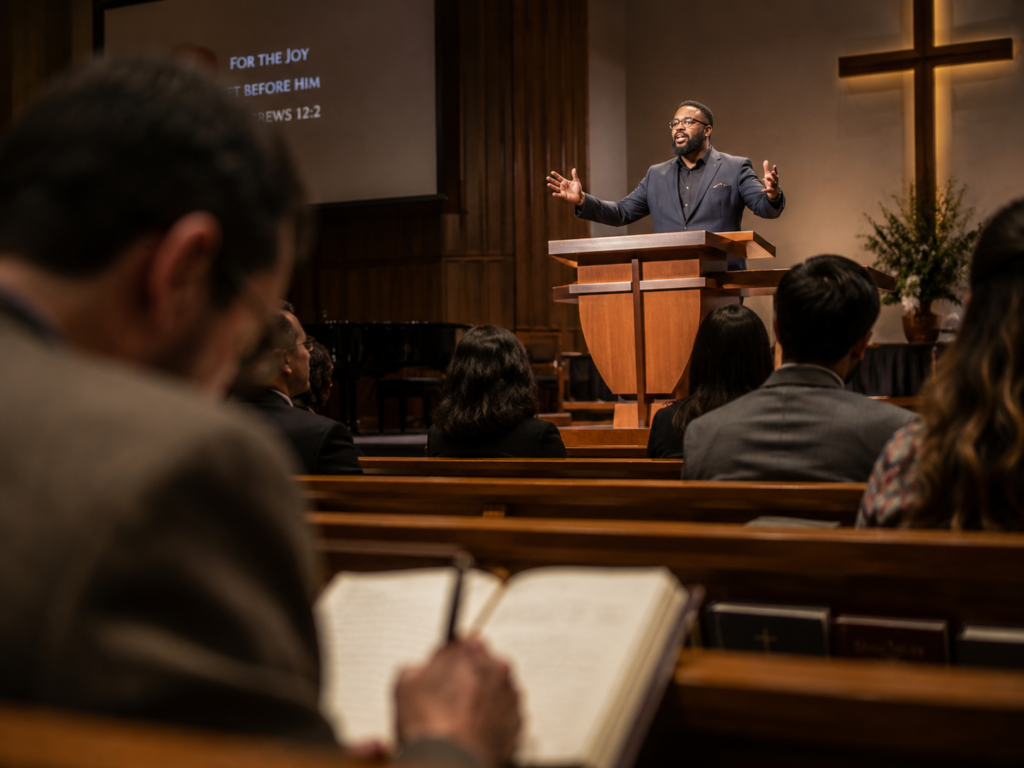
For years, the conventional wisdom among church growth consultants has been that shorter sermons increase congregation engagement. Cut the sermon to 20 minutes, they said, and you’ll keep the attention of a distracted audience. But a growing body of research suggests that the real issue isn’t length—it’s quality. According to a 2024 Lifeway Research study, 68% of churchgoers say they would listen to a longer sermon if it were more engaging, relevant, and biblically substantive. The key takeaway: congregation engagement sermon quality vs length research indicates that pastors should focus on improving content rather than simply trimming time.
What the Research Says About Sermon Length and Engagement
Barna’s 2023 State of Preaching report found that the average sermon length in American evangelical churches is 38 minutes, down from 42 minutes a decade ago. Yet congregation engagement scores have not improved correspondingly. In fact, 44% of respondents admitted their minds wander during sermons regardless of length. The data challenges the assumption that shorter automatically means better. A 2022 study from the Hartford Institute for Religion Research compared churches with sermons under 25 minutes to those with sermons over 35 minutes and found no significant difference in self-reported attention spans. What did correlate with engagement was the sermon’s structure, use of narrative, and practical application.
“The issue isn’t that people have shorter attention spans—it’s that they have higher expectations,” says Dr. Michael Duduit, editor of Preaching magazine. “A well-crafted 40-minute sermon can feel like 10 minutes; a poorly prepared 20-minute sermon can feel like an hour.”
Why Quality Matters More Than Length
Pastors often feel pressure to shorten sermons to accommodate busy schedules, but research suggests that depth and relevance are what truly hold attention. A 2023 survey by the Church Communications Group found that 72% of churchgoers rank “biblical depth” as the most important factor in sermon engagement, followed by “practical application” (61%) and “personal stories” (48%). Only 9% listed “short length” as a top priority. This aligns with broader trends in media consumption: audiences are willing to invest time in content that delivers value. Podcast episodes routinely exceed 60 minutes, and Netflix series often run 50–60 minutes per episode. The difference is quality production and compelling storytelling.
How to Improve Sermon Quality Without Adding Prep Time
Improving sermon quality doesn’t necessarily require more hours in study. Many pastors report that better preparation tools and methods can enhance both depth and engagement. For instance, using AI-assisted research platforms can streamline exegesis and illustration gathering. One platform addressing this need is Pastor Rhema, which helps pastors generate sermon outlines, find relevant commentaries, and craft illustrations in a fraction of the traditional time. Early adopters report cutting research time by 40–60%, freeing up hours for prayer, reflection, and personal application—factors that directly improve sermon quality.
Here are three research-backed strategies to boost sermon engagement:
- Start with a hook. Neuroscience research shows that the first 30 seconds determine whether listeners tune in or out. Open with a provocative question, a startling statistic, or a relatable story.
- Use narrative structure. The same 2022 Hartford study found that sermons using a three-act narrative structure (setup, conflict, resolution) scored 35% higher on engagement than those using a traditional three-point outline.
- Incorporate application breaks. Pause every 10–12 minutes to ask a reflective question or invite silent prayer. This resets attention and deepens processing.
Is This Biblically Sound?
Some pastors worry that focusing on engagement compromises biblical fidelity. But the two are not mutually exclusive. The Apostle Paul used rhetorical devices, cultural references, and storytelling to communicate deep theology. Jesus’ parables were masterclasses in engagement—short, vivid, and layered with meaning. The goal is not entertainment but faithful communication. A well-crafted sermon that holds attention is more likely to be remembered and applied than a dry exposition that loses the congregation in the first five minutes.
That said, there are trade-offs. Over-reliance on technology or storytelling can distract from the Word. The key is balance. Tools like Pastor Rhema can help pastors find that balance by providing quick access to solid exegesis while leaving room for the Spirit’s leading.
Practical Steps for Your Next Sermon Series
To test the congregation engagement sermon quality vs length research in your own context, consider these actionable steps:
- Survey your congregation anonymously about what they find most engaging in sermons. You may be surprised by their answers.
- Experiment with one sermon series where you prioritize depth over brevity. Measure feedback through small group discussions or follow-up surveys.
- Invest in one new preparation tool or method—whether a commentary series, a preaching workshop, or an AI assistant—and track the impact on your own confidence and your congregation’s response.
One pastor in Ohio told me that after implementing these changes, his congregation’s engagement scores rose 20% in six months, even as his sermons grew from 30 to 40 minutes. “They didn’t want shorter,” he said. “They wanted better.”
The evidence is clear: congregation engagement sermon quality vs length research points to a simple truth—your people are hungry for substance. They want sermons that feed their souls, challenge their thinking, and connect to their lives. That kind of preaching takes time, but not necessarily more time. It takes intentionality, creativity, and the right tools. The question is not whether to cut your sermon length, but whether to raise your sermon quality.