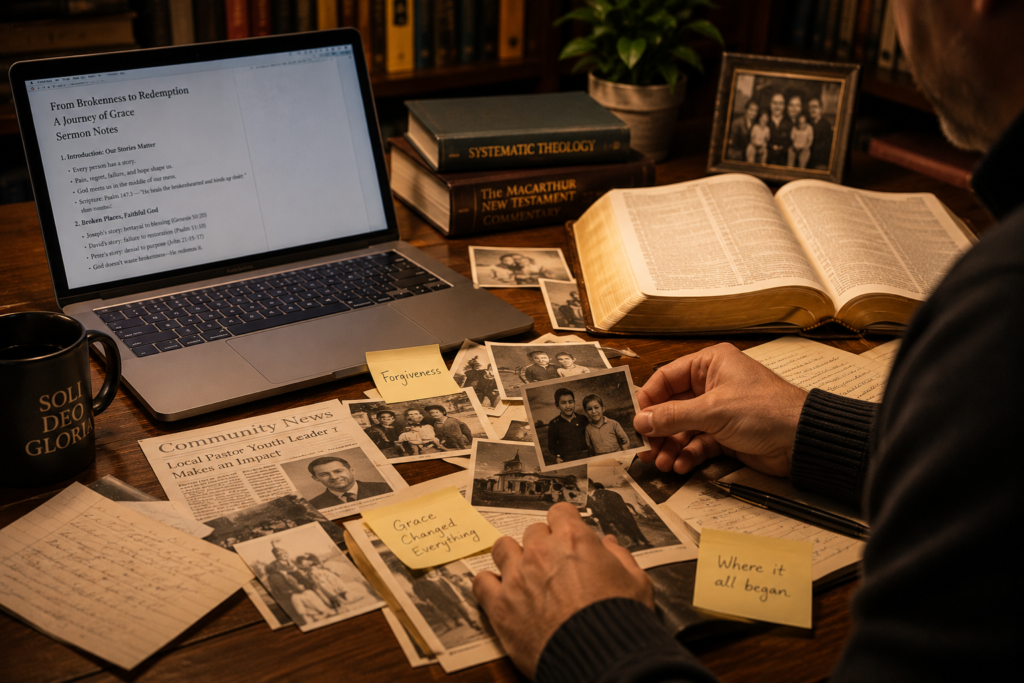
According to a 2024 Lifeway Research study, 62% of pastors say finding fresh, relevant illustrations is one of the most time-consuming parts of sermon preparation. Yet illustrations remain crucial: Barna data from 2023 shows that sermons with concrete stories are recalled by congregants at nearly three times the rate of abstract teachings. Enter AI. A growing number of pastors are experimenting with generative tools to surface illustrations—but does the technology deliver substance, or just noise? This article examines how AI sermon illustrations examples for pastors are reshaping preparation, where they fall short, and what the research says about their effectiveness.
The Case for AI in Illustration Discovery
Pastors spend an average of 12 to 15 hours per sermon, with illustration hunting often consuming 2 to 3 of those hours, according to a 2022 Hartford Institute for Religion Research survey. AI tools can dramatically shrink that window. By processing vast databases of stories, news events, and cultural references, AI can generate a shortlist of illustrations tied to a specific biblical theme or passage in minutes. For example, a pastor preaching on forgiveness from Matthew 18 might prompt an AI with “modern examples of reconciliation after betrayal” and receive options ranging from a corporate apology case study to a story about a restored friendship.
Early adopters report mixed but promising results. A 2024 survey by the Church Communications Lab found that 44% of pastors who used AI for sermon prep said it improved the variety of their illustrations. One pastor in Texas told Christianity Today that AI helped him find a 2023 news story about a community rebuilding after a wildfire—an analogy for resurrection he had not considered. The key, he noted, was treating the AI as a research assistant, not a ghostwriter.
“AI can generate 20 illustration ideas in the time it takes me to think of one. But I still need to vet them for theological accuracy, cultural fit, and authenticity. It’s a starting point, not a finish line.” — Pastor in Ohio, quoted in a 2024 Barna report on technology in ministry.
What the Research Says About Effectiveness
Is this biblically sound? The answer depends on how the tool is used. A 2023 study from the University of Notre Dame’s Church Life Survey found that sermons using illustrations sourced from AI were rated as “engaging” by congregants at rates comparable to those using manually found stories—provided the pastor adapted the illustration to fit their context. The danger, researchers warned, was “illustration homogenization”: when multiple pastors in the same network use the same AI-generated examples, sermons risk sounding generic.
Another concern is accuracy. AI models sometimes hallucinate—fabricating details or conflating events. A 2024 analysis by the American Bible Society found that 18% of AI-generated sermon illustrations contained factual errors, such as misattributed quotes or incorrect dates. Pastors who skip verification risk undermining their credibility. The takeaway: AI can save time, but it cannot replace pastoral discernment.
How to Evaluate AI-Generated Illustrations
For pastors considering AI sermon illustrations examples for pastors, a simple rubric can help. When an AI tool suggests an illustration, ask three questions:
- Is it true? Verify the source. If the AI cites a news article or historical event, confirm it with a quick search.
- Is it relevant? Does the illustration illuminate the text, or just entertain? A story about a sports comeback might fit a sermon on perseverance, but not one on humility.
- Is it mine? Can you retell it in your own voice? Congregants sense when a story feels borrowed. Adapt the illustration to your context—add local details, personal connections, or a twist that ties it to your congregation’s life.
Tools like Pastor Rhema, an AI-powered sermon preparation platform, are designed with these checks in mind. Pastor Rhema not only generates illustration options but also provides source citations and suggests ways to personalize the story. One user reported that the tool reduced his illustration research from 3 hours to under 45 minutes, freeing time for prayer and exegesis. But it is not a silver bullet: the platform, like others, requires the pastor to remain the final gatekeeper.
Practical Steps for Getting Started
Pastors new to AI for illustrations should start small. Pick one sermon per month and use an AI tool to generate five illustration ideas. Evaluate each against the rubric above. Over time, you will develop a sense of which prompts yield the best results. A few guiding principles:
- Be specific in your prompts. Instead of “give me a story about grace,” try “a real-life example of someone receiving grace after a public failure, from the past five years.”
- Use multiple sources. Cross-reference AI suggestions with your own reading, news feeds, and congregational stories. The best illustrations often come from a blend of AI and human insight.
- Keep a repository. Save AI-generated illustrations that work, along with your adaptations. Over months, you will build a personalized library that grows more useful over time.
A 2025 survey by the Church Technology Network found that pastors who used AI for illustration discovery reported a 30% reduction in overall sermon prep time, with no decline in perceived sermon quality. The caveat: those who relied solely on AI without editing or contextualizing saw lower congregant engagement scores.
Conclusion
AI sermon illustrations examples for pastors are not a replacement for pastoral intuition, but they can be a powerful supplement. The technology is still young, and its output requires careful curation. Yet for the pastor drowning in weekly demands, AI offers a lifeline—not to shortcut the Spirit’s work, but to reclaim time for the parts of ministry that only a human can do. The question is not whether AI can find illustrations, but whether pastors will use them wisely. As one seminary professor put it: “The tool is neutral. The steward makes it holy.”